
If you run an online store or are planning to start one, you probably feel pulled in a hundred directions: social media ads, paid campaigns, SEO, influencers, and more. Before you dive into all that, here is why investing in the best email marketing software for ecommerce is one of the smartest moves you can make.
Email marketing delivers an average return of roughly $36 for every $1 spent, far more than most other marketing channels. Because your emails reach people who have already interacted with your store, whether as customers, subscribers, or cart abandoners, the likelihood of conversion is significantly higher than with cold ad traffic.
In this guide, we walk you through a structured approach to choosing the right platform. We cover what truly matters when evaluating these tools, then review the 14 best email marketing platforms for ecommerce in depth, from beginner-friendly options to powerful, automation-heavy platforms. Whether you have just launched a store, are scaling up, or manage multiple ecommerce clients as an agency, by the end you will know what to look for and be ready to pick the best email platform for ecommerce for your specific situation.
TL;DR
- Klaviyo and Omnisend are the two strongest purpose-built choices: Klaviyo for data-driven depth, Omnisend for multi-channel simplicity.
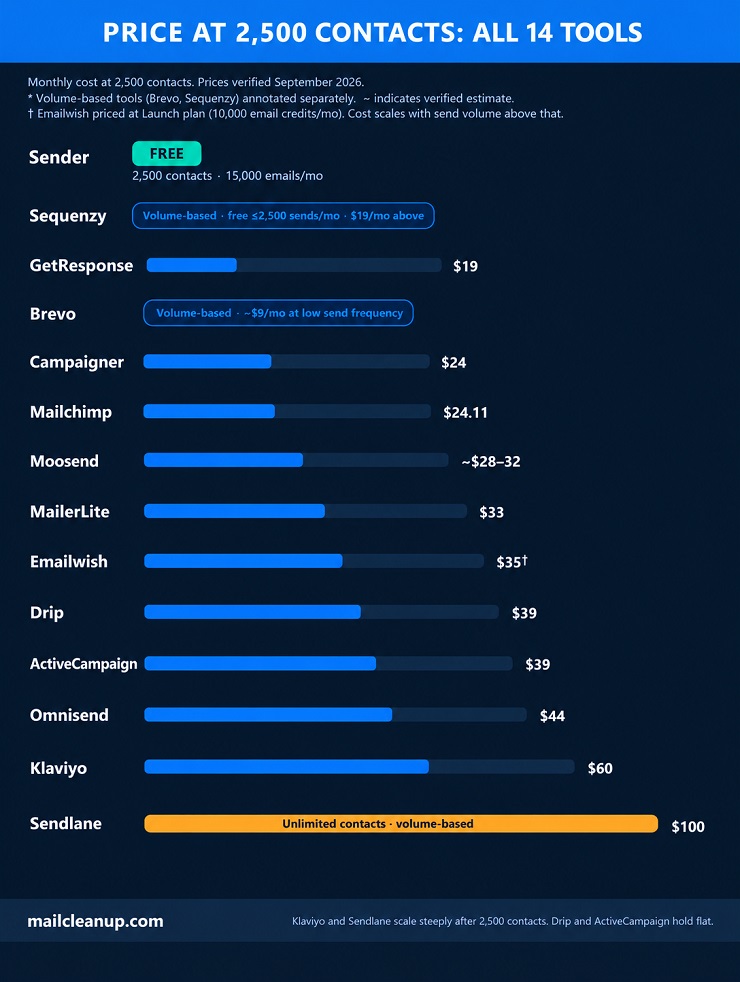
- Drip hits the middle ground with lifecycle automation and revenue tracking at $39/month, which is also the 2,500-contact entry price.
- MailerLite and Sender are the budget starts: Sender is free at 2,500 contacts, MailerLite Comfort runs $33/month at that same list size.
- Brevo is the volume-based pick for large lists that send selectively; Sendlane is the enterprise deliverability choice, priced from $100/month.
- Sequenzy is for tech-forward teams managing email through AI assistants or CLI workflows.
- Emailwish runs zero-setup ecommerce automation on Shopify with reviews, chatbots, and popups built in from day one.
Quick Comparison: The 14 Best Email Marketing Software for Ecommerce at a Glance
This table compares all 14 of the best email marketing software for ecommerce picks in this guide. Use it to shortlist two or three tools before reading the full reviews. Starting prices shown are for entry-level paid plans. Each tool review below includes its actual price at 2,500 contacts so you can compare like-for-like.
| Tool | Best For | Free Option | Starting Price | Standout Feature |
|---|---|---|---|---|
| Omnisend | DTC and multi-channel brands | Yes (250 contacts) | From $16/month | Email, SMS, and push from one dashboard |
| Moosend | Automation-focused SMBs | 30-day trial | From $9/month | AI-powered product recommendations |
| Klaviyo | Data-driven ecommerce brands | Yes (250 contacts) | From $20/month | Full B2C CDP built for purchase data |
| Drip | Revenue-focused lifecycle marketing | 14-day trial | From $39/month | Revenue dashboards with full attribution |
| MailerLite | Budget-conscious startups | Yes (250 contacts, 2,500 emails/month) | From $10/month | Clean automation at competitive pricing |
| ActiveCampaign | Multi-channel automation stacks | 14-day trial | From $15/month | Full CRM combined with email automation |
| Sendlane | High-volume DTC brands | 60-day trial | From $100/month | Unlimited contacts with managed deliverability |
| Brevo | Large lists, moderate send frequency | Yes (unlimited contacts) | From $9/month | Volume-based pricing, not contact-count based |
| GetResponse | All-in-one store marketing | 14-day trial | From $19/month | Email, landing pages, and funnels together |
| Sender | Stores on tight budgets | Yes (2,500 contacts) | From $10/month | Most generous free plan in this list |
| Sequenzy | AI-native ecommerce teams | Yes (2,500 emails/month) | From $19/month | Native CLI and MCP for AI-workflow teams |
| Emailwish | Shopify stores, done-for-you automation | Yes (1,000 credits/month) | From $35/month | Brand-first onboarding with zero-setup flows |
| Mailchimp | Established brands needing breadth | Yes (limited) | From $8.07/month | Deep third-party integration ecosystem |
| Campaigner | Growing stores, transparent pricing | 30-day trial | From $14/month | Clear per-contact pricing with no hidden jumps |
Why the Best Email Marketing Software for Ecommerce Still Beats Every Other Growth Channel
When you run an online store, email marketing is not just another channel. It is a core sales and retention engine. In ecommerce, that means welcome messages when someone subscribes, cart-abandonment reminders when they leave items behind, product recommendations based on past purchases, re-engagement emails to bring back dormant customers, order confirmations and shipping updates, newsletters, and discount or sale announcements. The best email marketing software for ecommerce ties all of this together in one place.
What Makes the Best Ecommerce Email Marketing Software Worth the Investment?
High ROI: The Best Email Marketing Software for Ecommerce Earns More Than Paid Ads
Email marketing continues to deliver one of the highest returns in ecommerce. On average, businesses earn roughly $36 for every $1 spent, a return that typically outperforms most paid ad or social campaigns by a wide margin. That kind of efficiency makes the best email marketing software for ecommerce hard to ignore when you are building or scaling a store.
Owned Channel: No Algorithm Tax with the Best Email Marketing Platforms for Ecommerce
Unlike social media or ad platforms where algorithms decide who sees your content, email gives you direct access to your customer’s inbox. You control when and how you communicate. The best email marketing platforms for ecommerce help you build a direct line to your audience that no platform policy change or ad auction can take away, which is something paid media cannot offer.
Automation at Scale: Core Capability of the Best Email Marketing Software for Ecommerce
With the right platform, you can trigger emails automatically based on real shopping behaviour: a welcome sequence when someone subscribes, a cart-abandonment reminder if they left mid-checkout, or a re-engagement nudge after a period of inactivity. Segment customers by purchase history, browsing behaviour, or engagement level and send personalized messages at scale. This lets a small team manage marketing for thousands of customers without a proportional increase in workload. When you invest in the best email marketing software for ecommerce, automation is typically where most of the ROI actually comes from.
Data and Analytics: How the Best Ecommerce Email Marketing Software Gets Sharper Over Time
Email marketing tools give you clear performance metrics keeping your list clean : open rates, click rates, conversion tracking, and revenue attribution. With that data, you learn what works, test subject lines, timing, and content, and optimize campaigns for better results over time. The best ecommerce email marketing software compounds in value the longer you use it, because every test feeds the next campaign and every result sharpens your strategy.
In short, when you pick the right platform from this list of the best email marketing platforms for ecommerce, you get a tool that helps you sell smarter, grow customer loyalty, and scale without pouring money into expensive ad spend.
How to Choose the Best Email Marketing Software for Ecommerce: The Ecommerce Email Platform Fit Stack
Here is the mindset we recommend when choosing the best email marketing software for ecommerce: start with what you need today, but choose software that will not limit you tomorrow. Growth is the whole point of ecommerce, and your email platform should not become the bottleneck.
How we evaluated these tools. Across multiple rounds of research, we assessed every platform against four layers of The Ecommerce Email Platform Fit Stack, the structured framework described below. We checked live pricing pages, tested free plans and trials where available, reviewed verified user feedback from G2, Capterra, and Trustpilot, and confirmed every ecommerce-specific feature claim from each platform’s own documentation. No platform paid for its position in this list.
The Ecommerce Email Platform Fit Stack: Our Four-Layer Framework for the Best Email Marketing Platforms for Ecommerce
We built every review in this guide around four questions. Together they form The Ecommerce Email Platform Fit Stack, the evaluation structure we applied to every tool so you can compare them on a consistent basis.
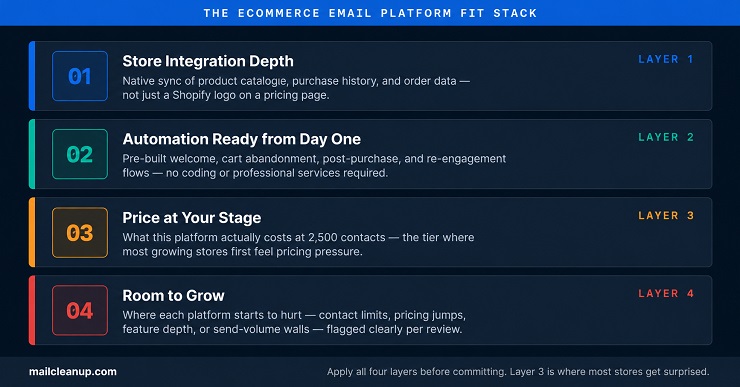
- Store Integration Depth: Does the platform sync your product catalogue, customer purchase history, and order data natively, or does it rely on manual CSV uploads and third-party connectors? Native sync means your automation fires from real shopping behaviour. Shallow integration means you are always working from stale data.
- Automation Ready from Day One: Can you activate the four core ecommerce flows, welcome series, cart abandonment, post-purchase follow-up, and re-engagement, without custom code or professional services? The best ecommerce email marketing software ships these as pre-built templates you can activate in minutes. A blank-canvas builder is not a feature at entry level; it is a hidden cost.
- Price at Your Stage: What does this platform actually cost at 2,500 contacts, the point where most growing stores first feel pricing pressure? Starting prices are often misleading. We give you the 2,500-contact price for every tool in its individual review so you are comparing real costs, not entry-level teaser pricing.
- Room to Grow: Where does each platform start to hurt? Every tool in this list has at least one ceiling, whether that is contact limits, send volume, feature depth, or price trajectory. We flag it clearly so you are not discovering it after you have already migrated.
Here are the eight criteria we evaluate within each layer when selecting the best email marketing software for ecommerce:
Store Integration Depth
- Ecommerce platform integration: native sync with Shopify, WooCommerce, BigCommerce, and others, covering products, customers, and order history
- Segmentation and personalization: ability to create dynamic, behaviour-based segments using live store data
Automation Ready from Day One
- Automation and workflows: pre-built support for abandoned cart, welcome series, post-purchase, and re-engagement flows
- Ease of use: an intuitive builder and ready-made ecommerce templates that do not require a developer to activate
Price at Your Stage
- Pricing and value: fair pricing tiers with the features your store actually needs at the size it is today
- Scalability: cost and feature trajectory as your list grows from hundreds to tens of thousands of contacts
Room to Grow
- Reporting and analytics: real-time performance tracking, sales attribution, and A/B testing
- Omnichannel capabilities: SMS, push notifications, and CRM integrations for stores that need multi-channel reach
The 14 Best Email Marketing Platforms for Ecommerce: Full Reviews
Now that we know what truly matters when picking the best email marketing software for ecommerce, here are the 14 platforms that actually deliver on those promises. Remember: there is no single perfect solution for every store. Your ideal platform depends on where you are today and where you are planning to go.
1. Omnisend: Best Ecommerce Email Marketing Software for Multi-Channel Brands
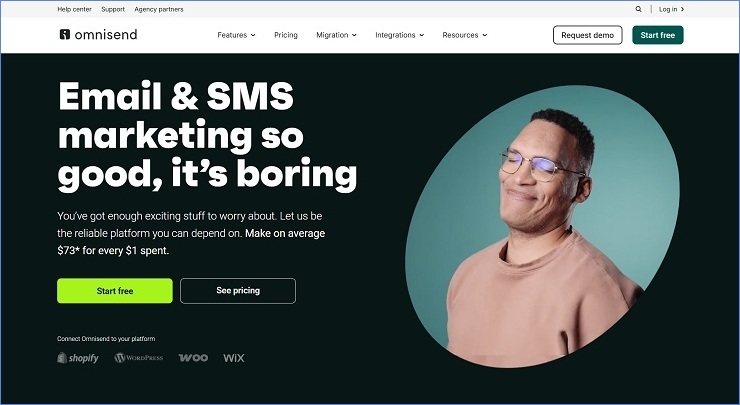
If you run an ecommerce store and are trying to pick the best email marketing platform for ecommerce, Omnisend often stands out, and for good reason. It is built specifically with online stores in mind, and it combines email, web push notifications, and automation features in a unified, easy-to-use dashboard. For stores that need SMS as well, it is available on the Pro plan.
With Omnisend, you get powerful automation and workflow capabilities: pre-built flows like welcome series, cart-abandonment recovery, post-purchase follow-ups, and shipping notifications that you can activate without touching code. Its segmentation and personalization tools let you send dynamic, behaviour-based messages, personalized product recommendations, and targeted campaigns that drive higher conversions. The drag-and-drop email builder and a large library of ecommerce-focused templates make it easy to design professional emails quickly. Because Omnisend integrates smoothly with Shopify, WooCommerce, and BigCommerce, your product catalogue, customer data, and order history stay in sync automatically.
For many small to medium-sized online stores and growing DTC brands, this combination of depth and ease makes Omnisend a strong pick among the best ecommerce email marketing software options available today.
Ideal for: ecommerce entrepreneurs and DTC brands who want to automate their marketing, recover lost sales, personalize customer messaging, and scale without juggling multiple tools.
Not ideal for: B2B-focused operations or stores that need deep CRM functionality. Also worth noting: SMS is only available on the Pro plan for accounts created after May 4, 2026. If SMS is central to your strategy from day one, budget for Pro rather than Standard.
What we like about Omnisend
- Great automation and workflow builder
- Solid segmentation and personalization tools
- Easy drag-and-drop email builder
- Direct native integration with major ecommerce platforms
- Email and web push notifications across all paid plans
- Beginner-friendly for non-technical founders
What we don’t like about Omnisend
- SMS only available on Pro for accounts created after May 4, 2026
- Free plan capped at 250 contacts and 500 emails per month
- Advanced automations have a learning curve
- Reporting is less customizable than some competitors
- Limited for CRM-heavy or B2B workflows
- Costs scale up as list size grows
Omnisend Pricing and Free Trial
Omnisend offers a Free plan covering up to 250 contacts and 500 emails per month, with access to automations, segmentation, and templates. No credit card required.
The Standard plan starts at $16 per month for 500 contacts, with pricing scaling by contact tier. At 2,500 contacts, Standard typically runs $44 per month. The Pro plan starts at $59 per month at the 2,500-contact tier and includes unlimited email sends, advanced reporting, and SMS credits equal to your monthly subscription fee.
One important change for 2026: as of May 4, 2026, SMS is no longer available on the Free or Standard plans for new accounts. Accounts that subscribed before that date keep their existing SMS access. Anyone signing up today needs the Pro plan to send SMS campaigns or automations.
2. Moosend: Best Email Marketing Software for Ecommerce Automation Workflows
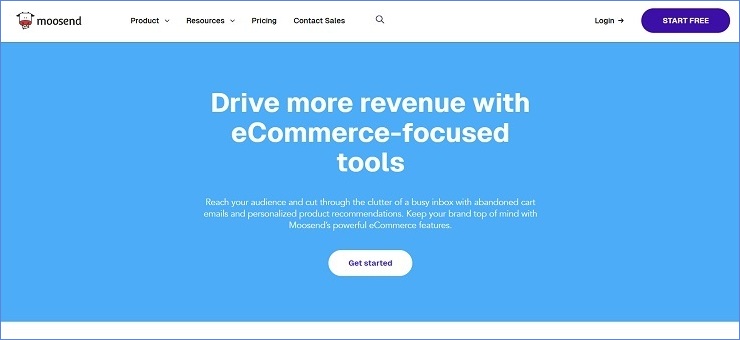
Moosend is a strong option if you are looking for the best email marketing software for ecommerce that balances ease of use with powerful automation. It is built to help you turn subscriber activity into timely, relevant emails that drive sales without requiring a large team or a technical background.
With Moosend, you can build advanced marketing automation workflows for welcome emails, abandoned carts, product follow-ups, and re-engagement campaigns without any code. The drag-and-drop email editor makes it easy to design conversion-focused emails quickly. What stands out is behaviour-based segmentation, which lets you target shoppers based on browsing activity, purchase history, and engagement patterns.
Moosend also supports AI-powered product recommendations, helping you send personalized messages at scale. Real-time analytics and A/B testing give you clear visibility into what is working and where to optimize. This combination of simplicity and depth makes Moosend a consistent choice among the best email marketing platforms for ecommerce for brands that want strong automation without the complexity of an enterprise tool.
Ideal for: small to mid-sized ecommerce stores, growing DTC brands, and agencies managing multiple ecommerce clients who want advanced automation, personalization, and solid reporting without a steep learning curve.
Not ideal for: stores that need native SMS or web push notifications, or enterprise teams requiring a full CRM with multi-channel capabilities out of the box.
What we like about Moosend
- Clean, beginner-friendly interface
- Strong automation and workflow builder
- Behaviour-based segmentation options
- AI product recommendations built in
- Reliable ecommerce integrations
- Solid analytics and A/B testing
What we don’t like about Moosend
- No native SMS or push notification support
- Limited built-in CRM features
- Advanced email designs need extra customization
- Fewer third-party integrations than top-tier tools
- Reporting depth varies by plan tier
- Smaller brand presence than the major players
Moosend Pricing and Free Trial
Moosend offers a 30-day free trial with full access to core features and no credit card required, giving you a real window to test automations, segmentation, and integrations before committing.
After the trial, pricing starts with the Pro plan, which is contact-based and includes unlimited email sends. For small lists, pricing starts at around $9 per month. At 2,500 contacts, Moosend Pro runs approximately $28-$32 per month, making it one of the more affordable options among the best email marketing software for ecommerce at that list size. For advanced needs, Moosend also offers Moosend+ and Enterprise plans with custom pricing that unlock transactional email, advanced reporting, dedicated IPs, and priority support.
3. Klaviyo: Best Email Platform for Ecommerce Data-Driven Stores
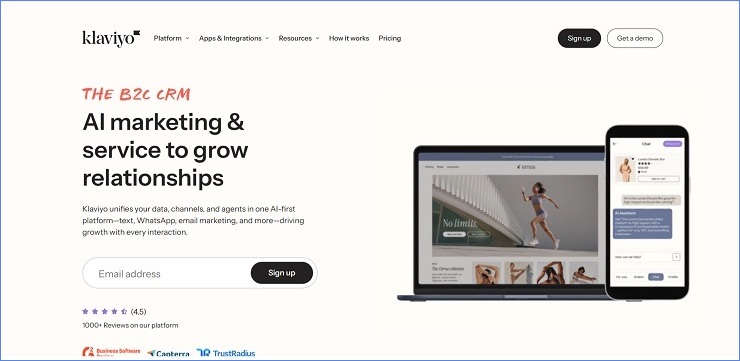
If you run an ecommerce store, Klaviyo is easily among the best email marketing platforms for ecommerce and often the safest long-term investment for serious growth. At its core, Klaviyo is not just an email tool: it is a full B2C CRM combined with marketing automation and a customer data platform built entirely for online stores. From one unified dashboard, you can combine email and SMS, track all customer interactions, and use real-time purchase data to power personalized marketing at scale.
What stands out for us are Klaviyo’s deep data-driven personalization features. It builds detailed customer profiles tracking browsing history, purchase history, and engagement, then lets you segment based on dozens of criteria. This means you can send highly targeted emails: welcome series, cart-abandonment reminders, re-engagement nudges, and VIP offers, all tailored to each customer’s journey. Klaviyo’s automation engine called Flows triggers messages based on real behaviour, including abandoned carts, post-purchase sequences, and birthday promotions, without any manual work required. The platform also supports omnichannel marketing across email, SMS, and mobile push from one place. Because Klaviyo integrates natively with Shopify, WooCommerce, and BigCommerce, your store data syncs automatically.
Ideal for: online stores and DTC brands, from growing shops to established ecommerce businesses, who want to build long-term customer relationships, automate marketing across channels, and leverage purchase data for personalized campaigns at scale.
Not ideal for: early-stage stores on a tight budget. Klaviyo pricing scales steeply with list size, and the jump from 500 contacts to 2,500 and beyond can surprise brands that did not plan for it.
What we like about Klaviyo
- Deep customer data and profile building
- Strong segmentation and personalization
- Automation Flows for email and SMS together
- Omnichannel support across email, SMS, and push
- Easy drag-and-drop email builder
- Native integration with major ecommerce platforms
What we don’t like about Klaviyo
- Free plan very limited at 250 active profiles
- Costs rise steeply as contact list scales
- SMS and email billed separately
- Can be complex for absolute beginners
- Advanced analytics features add to cost
- Requires consistent data hygiene for full value
Klaviyo Pricing and Free Trial
Klaviyo offers a Free plan for small or new stores covering up to 250 active profiles, 500 email sends per month, and 150 SMS credits. Once you grow, paid plans start at $20 per month for 251 to 500 contacts. At 2,500 contacts, the Email-only plan runs approximately $60 per month. An Email and SMS combined plan is available at a higher rate depending on SMS volume.
Because Klaviyo bills based on active profiles rather than total contacts stored, keeping your list clean directly reduces your monthly cost. This makes Klaviyo one of the few platforms where good list hygiene has a measurable financial impact beyond just deliverability.
4. Drip: Best Email Marketing Platform for Ecommerce Lifecycle Revenue
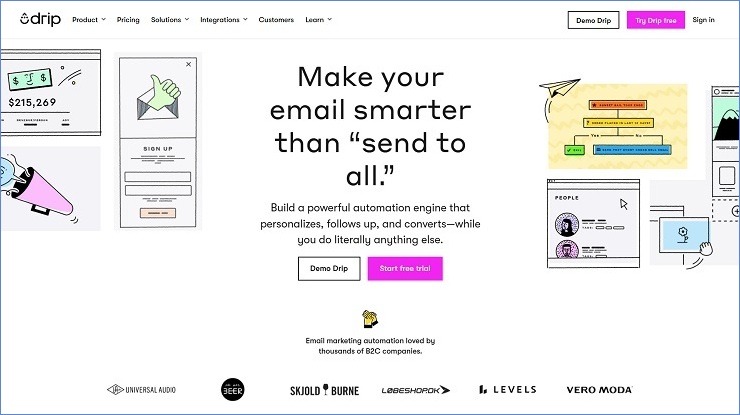
Drip is among the best email marketing software for ecommerce brands that want a more intentional, data-driven approach to customer communication. Instead of generic email tools, Drip is built for lifecycle marketing, making it easy to build automated journeys that mirror how real customers actually shop. Every action, whether a product view, an abandoned checkout, or a second purchase, can trigger a personalized email sequence designed to increase conversions and lifetime value.
What stands out is Drip’s focus on ecommerce revenue insights. You get revenue dashboards, workflow performance data, segment analytics, and detailed attribution in one place, so you can see which campaigns are generating money. Its visual automation builder handles advanced branching flows without feeling overwhelming. Because Drip integrates natively with Shopify, WooCommerce, and BigCommerce, all customer and product data syncs automatically. Dynamic product recommendations, behaviour-based targeting, and pre-built ecommerce playbooks let you move customers from first purchase to repeat purchase without constant manual effort.
Ideal for: ecommerce founders, DTC marketers, and growing brands focused on lifecycle marketing who want more analytical depth than traditional email tools offer. Drip is easily among the best email marketing platforms for ecommerce if your goal is growing revenue through personalization and lifecycle automation.
Not ideal for: first-time email marketers who need hand-holding through setup, or stores that want a permanent free tier before committing. Drip has no ongoing free plan.
What we like about Drip
- Strong behaviour-based automation engine
- Clean visual workflow builder
- Real-time ecommerce segmentation
- Revenue dashboards with attribution
- Dynamic product recommendations built in
- Templates tailored specifically for ecommerce
What we don’t like about Drip
- No permanent free plan
- Not beginner-friendly
- Pricing grows with contact count
- SMS features add to overall cost
- Interface has a learning curve initially
- Less design flexibility in email templates
Drip Pricing and Free Trial
Drip offers a 14-day free trial with full access to automations, segmentation, A/B testing, product feeds, and workflows. No credit card required for the trial.
After the trial, pricing starts at $39 per month for up to 2,500 contacts with unlimited email sends. This makes Drip notable in this list: the 2,500-contact price is also the entry price, so you are not being gradually repriced as your early list grows toward that tier. As your audience grows beyond 2,500, pricing increases by subscriber bracket. For ecommerce stores that prioritize personalization, automation, and lifecycle revenue tracking, Drip delivers solid value among the best ecommerce email marketing software at this capability level.
5. MailerLite: Best Email Marketing Software for Ecommerce on a Budget
MailerLite often earns its place among the best email marketing software for ecommerce for stores that want solid email marketing and automation without over-complicating or over-spending. It is built to be approachable yet capable enough to support serious campaigns.
With MailerLite, you get a drag-and-drop email builder and ecommerce-ready templates that let you design professional emails quickly without code. Pre-built ecommerce automation workflows handle welcome emails, abandoned-cart reminders, post-purchase follow-ups, and re-engagement flows. MailerLite also supports dynamic content, behaviour-based segmentation, and personalization, letting you tailor product suggestions to different customer segments based on purchase history. Because it integrates with major ecommerce platforms, your product data, orders, and contacts stay synced. For small to medium stores, this combination of ease and capability makes MailerLite a consistent recommendation among the best email marketing platforms for ecommerce on a budget.
Ideal for: small to medium ecommerce stores and startups that want a budget-friendly, capable email setup without juggling too many tools or paying for features they will not use for a while.
Not ideal for: high-volume senders, enterprise brands, or stores that need native SMS, push notifications, or a built-in CRM. MailerLite also tightened its free plan significantly in June 2026, so stores expecting a generous sandbox before upgrading will need to adjust expectations.
What we like about MailerLite
- Easy drag-and-drop editor and templates
- Ready-made ecommerce automation flows
- Dynamic content and segmentation support
- Ecommerce platform integration
- Transparent billing on active subscribers only
- Good value for small list sizes
What we don’t like about MailerLite
- Free plan reduced significantly: now 250 contacts and 2,500 emails per month as of June 2026
- No native SMS or push notifications
- Less powerful than dedicated CRM tools
- Transactional email requires a separate MailerSend product at extra cost
- Recent plan rename adds confusion for returning users
- Pricing went up 10 to 30 percent across all tiers in the June 2026 update
MailerLite Pricing and Free Trial
MailerLite updated its pricing and plan names in June 2026. The plan formerly known as Growing Business is now called Comfort; the Advanced plan is now called Power. The free plan currently covers up to 250 subscribers and 2,500 emails per month.
The Comfort plan starts at $12 per month for up to 500 subscribers, with unlimited email sends and full access to templates, dynamic content, and core automation. At 2,500 contacts, the Comfort plan typically runs at $33 per month. The Power plan adds advanced automation, A/B testing, and richer analytics, starting from around $25 per month for small lists. Given the recent price changes, we recommend checking MailerLite’s pricing page for your exact contact tier before committing.
6. ActiveCampaign: Best Email Marketing Platform for Ecommerce and CRM Combined
ActiveCampaign is a heavyweight option when you are looking for the best email marketing platform for ecommerce. It gives you a full marketing automation platform combined with CRM functionality and email tools that grow with your store.
You get advanced automation and workflow capabilities: from abandoned-cart reminders to lifecycle flows, post-purchase sequences, and re-engagement campaigns, all triggered by real customer behaviour. Detailed segmentation and behaviour-based targeting let you group customers by purchase history, browsing habits, or engagement levels and send personalized campaigns accordingly. For ecommerce stores, ActiveCampaign supports product-catalogue integration and dynamic content insertion, so your emails can include products relevant to each specific user. Multi-channel support across email, SMS, and site messages rounds out a solution that goes well beyond basic email broadcasting. This makes it one of the best email marketing software for ecommerce stores that need automation depth and genuine CRM capability in a single platform.
Ideal for: growing ecommerce brands and agencies managing multiple stores who need sophisticated automation, rich customer data, and scalable marketing workflows rather than just broadcast emails.
Not ideal for: small stores that only need basic email campaigns. The setup investment and pricing structure are not justified until you are actively building multi-step customer journeys.
What we like about ActiveCampaign
- Powerful automation and ecommerce workflow engine
- Detailed segmentation and behaviour-based targeting
- Dynamic product-catalogue integration in emails
- Multi-channel support across email, SMS, and site messages
- Scales well as contact list grows
- Combines CRM with email marketing cleanly
What we don’t like about ActiveCampaign
- More expensive than simpler email tools
- Setup and learning curve for advanced features
- SMS and site messages increase overall cost
- Can be overkill for small or simple stores
- Cost increases significantly at larger list sizes
- Some advanced features need manual tuning
ActiveCampaign Pricing and Free Trial
ActiveCampaign offers a 14-day free trial covering full access to automations, segmentation, and integrations. Pricing uses contact-based tiers. For 1,000 contacts, the Starter plan begins at $15 per month. At 2,500 contacts, Starter moves to $39 per month with unlimited email sends included. Higher-tier plans, Plus, Pro, and Enterprise, unlock deeper CRM tools, multi-channel messaging, and advanced reporting at higher price points. For ecommerce operations that need automation depth and CRM-level customer data, ActiveCampaign’s pricing reflects the capability tier it occupies among the best ecommerce email marketing software available today.
7. Sendlane: Best Email Marketing Platform for Ecommerce Deliverability
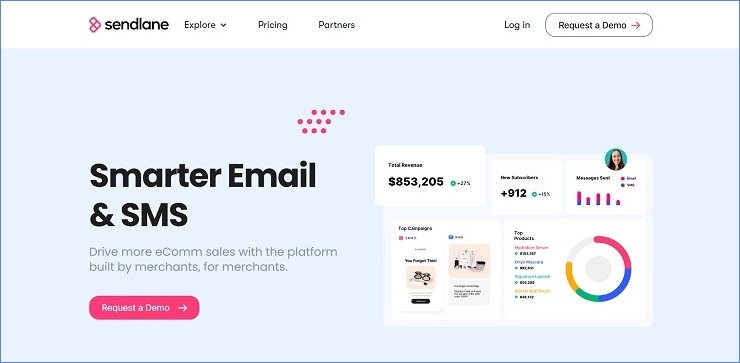
Sendlane is a powerful option if you are looking for the best email marketing platform for ecommerce that puts deliverability and revenue-focused automation at the centre. It blends email, SMS, and advanced automation with real-time revenue tracking, making it easier to understand what is actually driving sales. Pre-built ecommerce workflows, including abandoned cart, welcome, and post-purchase funnels, help you start fast and optimize quickly.
Another strong advantage is Sendlane’s behaviour-based segmentation and dynamic content, which lets you target customers based on browsing behaviour, purchase intent, and engagement patterns. For stores where inbox placement directly affects revenue, their managed deliverability and premium IP add-ons give an additional layer of protection that most platforms in this list do not offer. Sendlane also uses a send-volume pricing model with unlimited contacts, so your cost scales with activity rather than list size.
Ideal for: growing and enterprise-level ecommerce brands that send high volumes and rely heavily on automation and personalized campaigns. If deliverability, revenue tracking, and deep segmentation are central to your strategy, Sendlane stands out among the best ecommerce email marketing software at this tier.
Not ideal for: very small stores or teams just starting out. The $100 per month entry price reflects the platform’s positioning for established brands with meaningful email volume, and its depth is best used by teams that already have a clear email strategy in place.
What we like about Sendlane
- Strong ecommerce automation and pre-built workflows
- Revenue tracking with real-time analytics
- Behaviour-based segmentation and dynamic content
- Built-in email and SMS automation
- Managed deliverability and premium IP add-on options
- Unlimited contacts across all plans
What we don’t like about Sendlane
- $100 per month entry price is high for smaller stores
- 60-day trial is limited to 100 contacts and 500 emails
- SMS credits billed separately from base plan
- Learning curve for advanced automation features
- Higher tiers required for full support access
- Not designed for stores still in the early stages of email strategy
Sendlane Pricing and Free Trial
Sendlane uses a send-volume model with unlimited contacts. A 60-day free trial is available, capped at 100 contacts and 500 emails, giving you enough room to explore automations, segmentation, and templates before committing.
Paid plans start at $100 per month for up to 50,000 email sends per month. At 2,500 contacts with regular sending cadence, the $100 per month entry tier covers your volume comfortably, though it is a meaningful commitment compared to contact-based tools at the same list size. Optional add-ons for SMS credits, dedicated IPs, and advanced deliverability support increase total cost further. For high-volume DTC brands where inbox placement has a direct impact on revenue, Sendlane delivers solid value among the best email marketing platforms for ecommerce at this level of scale.
8. Brevo: Best Email Marketing Software for Ecommerce on Large Lists
If you run an online store and want a flexible, budget-conscious option for a large subscriber base, Brevo stands out as one of the best email marketing software for ecommerce platforms available. It brings email, SMS, WhatsApp, marketing automation, and CRM tools into one platform. A drag-and-drop email builder and ecommerce-ready templates make it easy to design professional campaigns quickly.
What we like most about Brevo is its send-volume-based pricing model combined with unlimited contact storage. You pay based on how many emails you send each month, not how many subscribers you have stored. This is a significant advantage for stores with large lists that do not email every contact frequently, because you are not penalized just for having a growing audience. Brevo also covers marketing automation, behaviour-based segmentation, dynamic content, and multi-channel campaigns across email, SMS, transactional messages, and WhatsApp, making it a flexible option among the best ecommerce email marketing software for stores that want multi-channel reach without overspending.
Ideal for: startups, growing stores, and businesses with large contact lists but moderate email frequency who want cost-efficient multi-channel capability without a contact-count pricing ceiling.
Not ideal for: stores that need ecommerce-native depth at the level of Klaviyo or Omnisend. Brevo is a strong general-purpose platform, but if browse abandonment flows, product recommendation engines, or deep purchase-behaviour segmentation are central to your strategy, a more ecommerce-focused tool will serve you better.
What we like about Brevo
- Send-volume pricing model with unlimited contacts
- Easy drag-and-drop editor and ecommerce templates
- Email, SMS, WhatsApp, and transactional messaging combined
- Automation, segmentation, and dynamic content on paid plans
- Affordable for large lists with moderate send frequency
- Good multi-channel reach on a budget
What we don’t like about Brevo
- Free plan has a daily send limit of 300 emails
- Automation and A/B testing require a paid plan
- CRM features less advanced than dedicated CRM tools
- Some advanced features only on higher-tier plans
- Not as ecommerce-native as Klaviyo or Omnisend
- Volume-based pricing can rise sharply for high-frequency senders
Brevo Pricing and Free Trial
Brevo offers a free plan with unlimited contacts and up to 300 emails per day, useful for testing the platform and building your list. The Starter tier begins at around $9 per month, removes the daily send limit, and increases your monthly volume allowance. The Business tier starts at around $18 per month and adds full automation, advanced segmentation, and A/B testing.
Because Brevo charges by send volume rather than contact count, the 2,500-contact price depends on how frequently you email them. Four sends per month to 2,500 contacts (roughly 10,000 emails) sits comfortably on the Starter tier, making Brevo one of the most cost-effective best email platform for ecommerce options for stores that are selective about cadence.
9. GetResponse: Best Email Marketing Platform for Ecommerce All-in-One Stacks
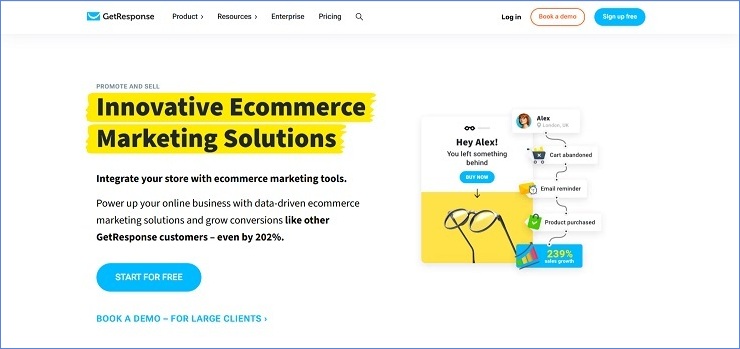
If you run an online store and want to manage everything from one place, GetResponse is a solid pick for the best email marketing platform for ecommerce that values breadth. It gives you email, SMS, push notifications, automation, ecommerce integrations, landing pages, and sales funnels from a single subscription.
GetResponse offers one-click integrations with Shopify, WooCommerce, and BigCommerce, so your product catalogue, customer data, and order history sync automatically. You can trigger behaviour-based automation like abandoned-cart reminders, post-purchase follow-ups, and promotional flows based on actual shopping behaviour without managing data manually. Advanced segmentation and personalization let you send tailored campaigns to different customer groups. The drag-and-drop builder covers both emails and landing pages in one editor, and the multi-channel stack includes web push notifications, SMS, transactional emails, and sales funnels, making GetResponse one of the more complete best email marketing software for ecommerce stacks in this list for a single monthly fee.
Ideal for: small to mid-sized ecommerce stores, boutique shops, and growing brands that want to manage emails, automation, landing pages, and customer engagement without buying separate tools for each function.
Not ideal for: stores that only need focused ecommerce email capability. If you primarily want a purpose-built ecommerce email tool and have no need for landing pages or funnels, other options in this list offer more targeted depth at lower cost.
What we like about GetResponse
- Full ecommerce-ready automation and native integrations
- Email, SMS, push, pop-ups, and funnels in one stack
- Behaviour-based segmentation and personalization
- Drag-and-drop builder for emails and landing pages
- Unlimited monthly sends on all paid plans
- Good all-in-one value for growing stores
What we don’t like about GetResponse
- Free plan limited in both features and contact count
- Best ecommerce features only on higher-tier plans
- SMS and advanced tools add to overall cost
- Can feel heavy for very small shops
- Some features require a learning curve to configure
- Reporting depth below top-tier CRM tools
GetResponse Pricing and Free Trial
GetResponse offers a 14-day free trial to test features before paying. Paid plans start at $19 per month billed annually on the Starter tier, covering unlimited monthly sends, basic automation, email scheduling, and list-building tools. At 2,500 contacts, the Starter plan at $19 per month is a cost-efficient entry point. If you want the full ecommerce feature set including abandoned-cart recovery, web push notifications, and sales funnels, the Marketer tier starts at around $59 per month for moderate list sizes. The breadth of the stack makes GetResponse a competitive option among the best email marketing software for ecommerce for stores that want to consolidate their marketing tools.
10. Sender: Best Ecommerce Email Marketing Software for Tight Budgets
When you want a capable email tool for your online store without a high entry cost, Sender earns its place among the best email marketing software for ecommerce for budget-conscious teams. It is built around drag-and-drop email building, automation, segmentation, and ecommerce-style workflows from a clean, easy-to-navigate dashboard.
Sender covers the core ecommerce flows out of the box: abandoned-cart campaigns, order confirmations, welcome sequences, and win-back flows, all automated so they run without manual effort. Popup forms, landing pages, and signup tools are included without upgrading, so you can grow your list without paying for separate lead capture tools. Multi-channel automation across email and SMS lets you reach shoppers on their preferred channel, and native integrations with Shopify and WooCommerce keep your product data accurate and current for personalized messaging.
Ideal for: small to mid-sized ecommerce shops and online brands who want a user-friendly, capable tool that grows with them and delivers strong value at every price point, including free.
Not ideal for: enterprise brands or stores needing advanced CRM features, deep ecommerce analytics, or a wide third-party integration ecosystem. Sender’s strength is accessibility and affordability, not enterprise-grade depth.
What we like about Sender
- Simple automation for core ecommerce flows
- Strong drag-and-drop email builder
- Landing pages and popup forms included at no extra cost
- Behaviour-based segmentation and targeting
- Email and SMS multi-channel messaging
- Easy onboarding for new users
What we don’t like about Sender
- Free plan shows Sender branding in emails
- SMS credits billed separately from base plan
- Advanced automation only on paid plans
- Enterprise pricing requires contacting sales
- Fewer third-party integrations than larger platforms
- Less reporting depth than advanced tools
Sender Pricing and Free Trial
Sender offers a Free Forever plan covering up to 2,500 subscribers and 15,000 emails per month with no credit card required. At 2,500 contacts, you pay nothing, making Sender the only tool in this list where that list size costs zero, and one of the most generous free plans among the best email marketing platforms for ecommerce.
When you need more, the Standard plan starts at around $10 per month, removing Sender branding, adding SMS messaging, unlimited templates, and A/B testing. The Professional plan at around $20 per month adds advanced automation, priority support, free SMS credits, and up to ten role-based user seats. For teams that want to start free and scale affordably, Sender offers a clear and well-structured upgrade path and proves to be one of the best ecommerce email marketing software.
11. Sequenzy: Best Email Marketing Software for Ecommerce AI-Native Teams
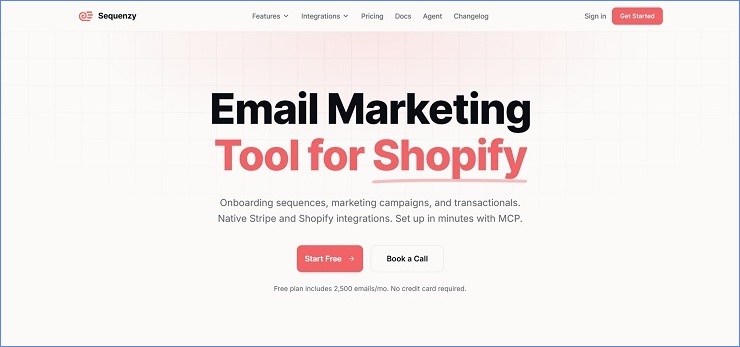
Sequenzy is an email marketing platform designed to handle the full range of ecommerce email, from automated sequences and campaign broadcasts to transactional messages, with a clean and developer-friendly architecture. What sets it apart from every other tool on this list is a native CLI interface and a built-in MCP server integration, meaning your team can manage campaigns, monitor performance, and trigger email workflows directly from a terminal or from within an AI assistant. For ecommerce teams building AI-assisted operations or managing email alongside developer workflows, this closes a capability gap that no other platform in this list addresses.
On the ecommerce side, Sequenzy connects to Shopify and covers the essential automated flows: welcome sequences, campaign broadcasting, and transactional email delivery in one platform. Its pricing model is volume-based rather than contact-count based, so you pay for what you send rather than for how large your subscriber list grows. This suits stores with sizeable lists that segment carefully and send selectively, keeping costs predictable as the audience scales. For stores running subscription products or digital catalogues, the transactional-plus-marketing combination within a single platform removes the need to stitch together separate tools for different email types.
Ideal for: tech-forward ecommerce teams who want to manage their email marketing natively through CLI or AI assistant workflows; also works well for stores operating subscription models or digital product catalogues where email sits at the centre of the recurring revenue cycle.
Not ideal for: stores that rely on browse abandonment tracking or native product recommendation engines, as Sequenzy takes a more focused approach to ecommerce automation than the purpose-built ecommerce platforms higher up in this list. Teams that need the deepest possible ecommerce-native toolset will want to compare feature depth before committing.
What we like about Sequenzy
- Native CLI for managing campaigns directly from the terminal
- MCP server integration for AI assistant workflows
- Shopify integration included
- Volume-based pricing with unlimited contacts
- Transactional and marketing email handled in one platform
- Clean, developer-friendly interface that does not get in the way
What we don’t like about Sequenzy
- No native SMS or push notifications
- No built-in product recommendation engine
- No browse abandonment tracking
- Smaller ecosystem with fewer third-party integrations
- Better suited for technical teams than beginner marketers
- Ecommerce automation breadth narrower than dedicated ecommerce-native tools
Sequenzy Pricing and Free Trial
Sequenzy offers a free plan that includes 2,500 emails per month with unlimited contacts and no credit card required. This is enough to set up core email flows, test the Shopify integration, and explore the CLI and MCP capabilities before spending anything.
Paid plans start from $19 per month on a volume-based model tied to how many emails you send rather than how many subscribers you store. At 2,500 contacts, Sequenzy’s free plan covers your volume entirely, and the $19 per month paid tier unlocks higher send volume and full feature access. For ecommerce teams already working with AI-powered tooling and developer-first workflows, Sequenzy offers a genuinely differentiated entry among the best email marketing software for ecommerce at this price point.
12. Emailwish: Best Ecommerce Email Marketing Software for Done-for-You Shopify Stores
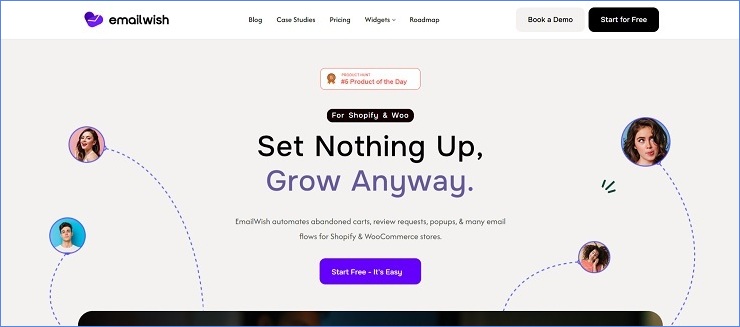
EmailWish automatically generates and sets up multiple email flows tailored to each brand, so merchants can start marketing without spending hours building flows from scratch.
EmailWish brings email marketing, reviews, live chat, popups, and wishlists together in one dashboard, so merchants don’t have to manage separate apps for every customer interaction. More importantly, these tools work together and feed customer interactions into the same customer data. This gives brands a more complete picture of how shoppers engage with their store. That data can then be used to create more precise customer segments and highly targeted email campaigns based on actual shopper behavior. Emailwish provided more detailed targeting options, even better than its biggest competitor, Klaviyo
For Shopify stores that want omnichannel engagement without managing five separate tools, this makes Emailwish a practical option among the best ecommerce email marketing software available at this tier.
Ideal for: Shopify stores, particularly new or growing DTC brands, that want email automation, reviews, popups, and chatbot functionality running from day one without building or configuring any flows from scratch.
Not ideal for: stores that need advanced custom segmentation, deep ecommerce analytics, or CRM-level reporting; high-frequency senders will find the credit-based pricing model adds up quickly, and WooCommerce stores should verify feature parity with Shopify before committing.
What we like about Emailwish
- Brand-first onboarding activates flows automatically with no manual setup required
- Built-in reviews, chatbots, wishlists, and stock alerts alongside core email
- Cross-channel triggers: chat, review, and popup activity feeds directly into email sequences
- Abandoned cart, welcome, post-purchase, and review request flows included and ready to go
- Native Shopify App Store integration with WooCommerce support
- Free plan available to test core automations before committing to paid
What we don’t like about Emailwish
- Credit-based pricing can get expensive for stores that email their full list frequently
- Seed plan (1,000 credits/month) is too limited for lists approaching 2,500 contacts with any meaningful send cadence
- No native SMS channel
- Analytics and reporting less granular than dedicated platforms like Klaviyo or Drip
- Smaller third-party integration ecosystem compared to the larger tools in this list
Emailwish Pricing and Free Trial
Emailwish offers a Seed plan that is free forever, covering 1,000 email credits per month. This is enough to explore the platform, test the brand onboarding, and run automated flows on a very small early-stage list.
For stores with 2,500 contacts sending at a standard cadence of three to four emails per month, the Launch plan at $35 per month is the practical entry, covering 10,000 email credits monthly (for up to 5,000 contacts). Unlike the contact-based tools elsewhere in this list, Emailwish bills on the number of emails you send rather than the size of your list. This works well for stores that segment carefully and send selectively. Stores that send to their full list every week will burn through credits faster and should calculate their expected monthly send volume before choosing a plan.
The Growth plan at $100 per month covers 50,000 credits for higher-volume operations. At 2,500 contacts on a moderate cadence, the $35 per month Launch plan keeps Emailwish competitive on the email marketing for Shopify and ecommerce spectrum, with built-in reviews, chatbots, popups, and wishlists included in that same subscription.
13. Mailchimp: Best Email Marketing Platform for Ecommerce Brand Ecosystem
Mailchimp is one of the most recognized names when it comes to the best email marketing software for ecommerce, and for stores that value a wide integration ecosystem and broad feature set, it remains a relevant option. At its core, Mailchimp provides email automation, audience segmentation, CRM tools, and multi-channel messaging from one dashboard. You can build automated ecommerce workflows including welcome series, cart abandonment triggers, order follow-ups, and lifecycle campaigns tailored to shopping behaviour.
The drag-and-drop email builder, paired with hundreds of templates, makes designing professional campaigns fast. Advanced audience insights and analytics help you track what is driving sales. For many online stores, Mailchimp’s wider ecosystem, including landing pages, pop-ups, and ad integrations, keeps marketing activity in one place. One important update: as of June 2025, Mailchimp removed email automation from its free plan entirely. Any automated flow, including a basic welcome series, now requires a paid subscription. Because of its breadth of integrations, Mailchimp remains among the best email marketing platforms for ecommerce for stores that need wide third-party compatibility and a familiar, well-supported platform.
Ideal for: small to mid-sized ecommerce stores and growing brands that want a well-established all-in-one marketing platform with strong analytics, a large integration library, and broad third-party tool compatibility.
Not ideal for: stores that prioritize ecommerce-native depth over breadth. The removal of automation from the free plan in June 2025 also reduces its appeal for new stores testing automated flows before committing to paid.
What we like about Mailchimp
- Deep third-party integration ecosystem
- Easy drag-and-drop email builder
- Advanced segmentation and personalization
- Includes landing pages and pop-up tools
- Built-in CRM with audience insights
- Wide compatibility with ecommerce platforms
What we don’t like about Mailchimp
- Automation removed from free plan in June 2025
- Pricing increases steeply as contact list grows
- Some key features locked behind higher-tier plans
- Inactive contacts still counted toward billing
- SMS and MMS available only as paid add-ons
- Interface can be confusing for first-time users
Mailchimp Pricing and Free Trial
Mailchimp’s free plan currently allows up to 250 contacts and 500 emails per month, with automation no longer included. Any automated workflow now requires a paid plan.
The Essentials tier starts at around $8.07 per month for small lists, covering templates, A/B testing, and 24/7 support. At 2,500 contacts, Mailchimp Essentials typically costs $24.11 per month, which is higher than several alternatives in this list at the same size. The Standard plan adds advanced automation, send-time optimization, and deeper analytics. For high-growth brands or larger ecommerce teams, the Premium plan starts at $241.08 per month and includes unlimited audiences, advanced segmentation, multivariate testing, and priority support. Mailchimp also offers pay-as-you-go credits and SMS add-ons for multi-channel needs.
14. Campaigner: Best Email Marketing Software for Ecommerce with Transparent Pricing
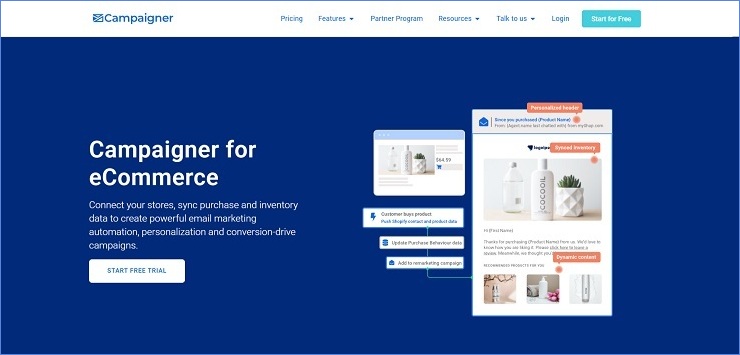
Campaigner is a capable email marketing solution that suits ecommerce stores looking for a data-driven platform with clear, per-contact pricing and no hidden fees. It delivers advanced automation and workflow capabilities, letting you build welcome sequences, abandoned cart flows, re-engagement campaigns, and post-purchase upsell sequences with a solid automation builder.
Behaviour-based segmentation lets you group customers by purchase behaviour, engagement patterns, or lifetime value so you can send more relevant campaigns to each group. Multi-channel messaging across email, SMS, and mobile alerts extends your reach beyond the inbox. Real-time analytics and A/B testing give you clear insight into performance, and native ecommerce integrations with Shopify, WooCommerce, and BigCommerce connect your live store data for triggered campaigns. For stores that want a predictable cost structure and genuine automation capability, Campaigner holds its ground among the best email marketing platforms for ecommerce at this tier.
Ideal for: growing ecommerce stores that want robust automation, detailed segmentation, and a transparent pricing structure they can plan around as their list scales.
Not ideal for: stores that need a beginner-friendly onboarding experience or a design-forward interface. Campaigner is functional and capable but not as visually polished as some newer tools in this list, and SMS features add to overall monthly cost.
What we like about Campaigner
- Strong ecommerce automation and workflow builder
- Behaviour-based segmentation and targeting
- Email and SMS multi-channel messaging
- Real-time analytics with A/B testing
- Shopify, WooCommerce, and BigCommerce integrations
- Clear per-contact pricing with no hidden jumps
What we don’t like about Campaigner
- Advanced segmentation only on higher-tier plans
- SMS functionality increases overall monthly cost
- Interface less modern than newer competitors
- Less brand recognition than top-tier tools
- Onboarding process can feel dated for first-time users
- Fewer native integrations than larger platforms
Campaigner Pricing and Free Trial
Campaigner offers a 30-day free trial with access to core features before open rates, click rates committing. Pricing is contact-based and clearly structured. The Essentials plan starts at $14 per month for up to 1,000 contacts, covering core email automation, Shopify, WooCommerce, and BigCommerce integrations, abandoned cart flows, and contact syncing. At 2,500 contacts, the Essentials plan typically costs $24 per month. The Advanced plan, which adds behaviour-based segmentation and purchase tracking, starts at $35 per month for smaller lists and scales with contact count. A Custom plan is available for high-volume senders. For growing ecommerce brands that value cost predictability, Campaigner offers transparent value among the best email marketing software for ecommerce at this tier.
Picking the Best Email Marketing Software for Ecommerce: A Decision Guide
Choosing the best email marketing software for ecommerce is not just about picking the tool with the most features. It is about finding the platform that fits how you actually run your business today, without boxing you in tomorrow. Think of this as a practical decision guide. The Ecommerce Email Platform Fit Stack gives you the evaluation lens; this section translates that into a direct match between your situation and the tools in this list.
Before using the table below, ask yourself three questions: What ecommerce platform are you on? What is your budget at 2,500 contacts? And what is the one capability you cannot compromise on? Those three answers will narrow the field significantly.
| Your situation | Best match from this list |
|---|---|
| Shopify store, want multi-channel from day one | Omnisend, Klaviyo |
| WooCommerce or BigCommerce store, need deep automation | Klaviyo, Drip, GetResponse |
| Custom platform or headless commerce | ActiveCampaign, Klaviyo, GetResponse |
| Starting out on a very tight budget | Sender, MailerLite, Moosend |
| Growing DTC brand, ready to invest in automation depth | Drip, Klaviyo, ActiveCampaign |
| Large contact list, moderate send frequency | Brevo |
| High-volume brand, deliverability is a revenue issue | Sendlane |
| Want email plus landing pages and funnels in one subscription | GetResponse |
| Tech-forward team using AI assistant or CLI-based workflows | Sequenzy |
| Subscription ecommerce or digital product catalogues | Sequenzy, ActiveCampaign |
| Need the widest third-party integration ecosystem | Mailchimp, ActiveCampaign |
| Want clear per-contact pricing with no surprises | Campaigner |
| Shopify store, want zero-setup done-for-you flows with reviews and chatbots | Emailwish |
Getting the Most from the Best Email Marketing Software for Ecommerce: Core Best Practices
Once you have chosen the best email marketing software for ecommerce, the real growth starts. The tool is only as effective as the strategy behind it, and a few fundamentals consistently separate stores that get strong email revenue from those that do not. Think of these as the baseline every ecommerce brand should have in place.
Start with a Clean List
Your list is the foundation of every campaign you will ever send. Emailing people who never opted in damages your deliverability and harms your sender reputation before you have even started. Always use a confirmed opt-in process, avoid purchased lists entirely, and clean out inactive contacts on a regular basis. Good list hygiene also directly reduces your monthly cost on contact-based platforms like Klaviyo, making it a financial decision as much as a deliverability one. This helps your emails land in the inbox, not spam, which is what every store owner wants when using the best email marketing platforms for ecommerce.
Segment Your Audience To Drive Higher Conversions
Sending the same email to your entire list is the fastest way to reduce engagement across the board. The best email marketing platforms for ecommerce give you segmentation tools to target high-intent shoppers differently from first-time visitors, to reward loyal customers, and to give dormant contacts a specific re-engagement message rather than a generic broadcast. Even basic segmentation by purchase history and recency consistently outperforms unsegmented sends. Start with two or three segments before building more complex logic.
Automate the Essential Flows
Automation is where ecommerce email earns its ROI. Once set up correctly, it works without manual effort every day. At minimum, every store should have four flows active before spending time on campaigns: a welcome series, a cart abandonment flow, a post-purchase follow-up, and a re-engagement flow. These four flows account for the majority of email-attributed revenue for most stores that use the best email platform for ecommerce effectively. Set them up once, then optimize based on results.
Optimize Your Email Content to Get Better Results
Because most ecommerce customers browse on their phones, your emails need to perform on small screens first. Keep designs clean, use short paragraphs, and make your call-to-action clear and tappable. Write subject lines that create genuine curiosity rather than clickbait. Where your platform supports it, use dynamic product recommendations based on past purchases. The best email marketing software for ecommerce gives you the tools to personalize at scale; your content strategy determines whether that capability translates into revenue.
Track Performance Over Time
Data is what turns email from a broadcast channel into a learning system. After every campaign and at regular intervals on your flows, review the metrics that matter: open rate, click rate, revenue per email, and unsubscribe rate. The best ecommerce email marketing software gives you this data directly. Use it to run tests, drop what is not working, and double down on what is.
Common Mistakes to Avoid with the Best Email Marketing Software for Ecommerce
Even when you choose the best email marketing software for ecommerce, results can suffer if a few critical mistakes creep in. These are the most common ones we see:
- Choosing based only on price or free plan availability. The best email marketing platforms for ecommerce need to support automation, segmentation, and scaling. A tool that cannot grow with you will require a migration at the worst possible time.
- Overlooking ecommerce platform integrations. If your tool does not natively sync with your store, you lose the purchase data that makes the best email marketing software for ecommerce valuable. Every tool in this list integrates natively with at least one major ecommerce platform.
- Sending too many or irrelevant emails. The best email platform for ecommerce is only as good as your send strategy. Batch blasting your full list without segmentation destroys engagement and damages sender reputation over time.
- Skipping segmentation and personalization. Sending the same message to everyone wastes what the best ecommerce email marketing software actually gives you. Even basic segmentation by purchase history produces meaningfully better results than unsegmented sends.
- Ignoring email deliverability basics. Authentication (SPF, DKIM, DMARC), regular list cleaning, and protecting your sender reputation all affect whether your emails reach the inbox. The best email marketing software for ecommerce cannot compensate for poor deliverability habits.
- Failing to track and optimize performance. If you are not reviewing revenue attribution, click rates, and unsubscribe trends, you are missing the feedback loop. The best email marketing platforms for ecommerce provide these metrics precisely so you can improve over time.
- Not planning for growth. The tool that works well at 500 contacts may not work at 10,000. Choose software that will not require a full platform migration at the next meaningful milestone in your list size.
Which Best Email Marketing Software for Ecommerce Fits Your Store Right Now?
When it comes to choosing the best email marketing software for ecommerce, there is no single tool that works perfectly for every store. The right platform depends on where your business is today, where you want to go, and how complex your marketing needs actually are. A new store may only need a welcome flow and basic newsletters. A growing brand may need advanced automation, segmentation, and SMS. A tech-forward operation may want native AI tooling and CLI integrations. That is why the best email marketing platforms for ecommerce are the ones that match your current stage, not just the ones with the most impressive feature list.
We recommend testing before committing. Every tool in this list offers either a free plan or a free trial. Use them. Set up a cart abandonment flow. Send a test campaign. Check how your store data syncs. This hands-on step takes a few hours and consistently surfaces issues that a feature comparison table cannot predict.
Start simple. Get your four core flows running before you explore advanced features. As your store grows and email becomes a measurable revenue channel, you will have the data you need to choose your next move confidently. One thing every tool in this list depends on: a clean, verified list. Deliverability, personalization accuracy, and cost on contact-based platforms all hinge on your list quality.
And, if you are a beginner, you must check out our dedicate and robust guide on ecommerce email marketing.
Quick FAQs on Best Email Marketing Software for Ecommerce, Answered
Do I really need the best email marketing software for ecommerce if I already run social ads?
Yes. Social ads stop working the moment you stop paying for them. Email builds an audience you own outright. Once someone joins your list, you can reach them again without paying for every interaction. The average ecommerce email generates around $36 in revenue for every $1 spent, a return that most paid ad campaigns do not consistently match.
Can I start with a free plan from the best email marketing platforms for ecommerce and still get results?
You can. A free plan is enough to set up core automated flows and start building your list. The key is not the plan tier; it is what you activate within it. Even a basic welcome series and an abandoned cart reminder can drive meaningful early revenue. Focus on getting those flows live before worrying about upgrading.
What if my store uses a custom platform? Which best email marketing platform for ecommerce still works?
Most platforms connect via API or custom integration, so a custom store is not a blocker. ActiveCampaign, Klaviyo, and GetResponse all offer strong API-first integrations that work with non-standard setups. You may need some developer time to configure the initial connection, but once it is done the automation runs identically to a native Shopify or WooCommerce sync.
Is the best email platform for ecommerce still worth the investment in 2026?
Very much so. What has changed is how it is done. Generic newsletters blasted to your full list perform poorly. Behaviour-triggered, segmented emails tied to purchase history and engagement still outperform most other marketing channels on ROI. In 2026, email’s edge comes from relevance and timing, not volume.
How many emails should I send each month with the best email marketing software for ecommerce?
There is no universal answer. A reasonable starting point is two to four campaigns per month alongside active automated flows. Watch your engagement metrics closely. If unsubscribe rates climb or open rates drop, pull back on frequency. The right cadence is the one your audience tolerates without disengaging.
What is the first automated flow to set up with the best ecommerce email marketing software?
Start with your welcome series. It consistently produces the highest engagement of any automated flow, because subscribers are most attentive immediately after joining. Once your welcome series is live and optimized, add cart abandonment. Together, those two flows typically account for the majority of email-attributed revenue for stores in their first year of active email marketing.
Do I need a large list to get results from the best email marketing platforms for ecommerce?
Not at all. A small, engaged list consistently outperforms a large, disengaged one. List size matters far less than list quality. A few hundred genuinely interested subscribers will generate more revenue than tens of thousands of cold or inactive contacts. Focus on acquiring subscribers who actually want your emails, and clean your list regularly to keep it performing.
What is the best email marketing software for ecommerce for Shopify stores specifically?
For most Shopify stores, Omnisend and Klaviyo are the two strongest choices. Omnisend is the more accessible entry point, with a generous free plan and pre-built ecommerce flows that activate quickly. Klaviyo is the better choice for data-driven stores that want deep customer profiling and advanced segmentation. Drip is also worth considering if lifecycle revenue tracking is a priority.