

Are you on the hunt for the best Elastic Email alternatives in 2026? You’re not alone. While Elastic Email has served many businesses as a reliable email marketing and transactional email tool, it comes with its fair share of challenges. From deliverability concerns and scaling limitations to feature gaps and inconsistent support, more and more users are realizing they need an Elastic Email alternative that better fits their needs.
That’s where this guide comes in. We’ve put together a list of the 10 best alternatives to Elastic Email, carefully analyzed for their features, pros, cons, and pricing. Each platform has its own strengths—whether it’s all-in-one marketing solutions, developer-friendly APIs, or budget-friendly plans—so you’ll have a clear idea of which one is right for your goals.
This guide is designed for business owners, marketers, developers, and agencies who want an email solution that’s reliable, scalable, and tailored to their needs. By the end, you’ll know exactly which Elastic Email competitor is worth switching to in 2026.
Why Look for an Elastic Email Alternative?
Elastic Email is affordable and easy to set up, but many users are turning to Elastic Email alternatives because of recurring challenges. Here are the main reasons you might want to consider an alternative to Elastic Email:
- Deliverability issues – Emails don’t always land in the inbox, hurting open and click rates.
- Limited features – Basic automation and integrations, but not enough for advanced campaigns.
- Scaling problems – Pricing and performance can become restrictive as your business grows.
- Inconsistent support – Slow or unreliable help when deliverability or technical issues arise.
- Integration constraints – Fewer connections with CRMs, eCommerce tools, and analytics platforms.
The Bottom Line
If you want better inbox placement, advanced automation, reliable customer support, and a platform that scales with you, it’s worth exploring alternatives to Elastic Email. The good news? There are plenty of strong competitors to Elastic Email that deliver exactly that.
Comparison Table of Elastic Email Alternatives
| Software | Key Features | Best For | Free Plan | Starting Price |
|---|---|---|---|---|
| Brevo | Marketing automation, SMS, CRM, email templates, segmentation | Small to medium businesses, marketers | ✔ Free up to 300 emails/day | $9/month (Starter Plan) |
| MailerSend | Transactional emails, APIs, webhooks, templates, analytics | Developers, SaaS, agencies | ✔ Free 3,000 emails/month | $35/month (50k emails) |
| SendPulse | Omnichannel (email, SMS, push, chatbots), automation, AI personalization | Growing businesses, eCommerce, agencies | ✔ Free up to 15,000 emails/mo | $10/month (500 subscribers) |
| EmailOctopus | Simple UI, automation, Amazon SES integration, affordable pricing | Startups, nonprofits, small businesses | ✔ Free up to 10,000 emails/mo | $9/month (up to 500 subs) |
| SMTP2GO | Global SMTP relay, detailed reporting, bounce tracking, email testing | Transactional emails, reliable delivery | ✔ Free up to 1,000 emails/month | $15/month (10k emails) |
| SendGrid | APIs, SMTP relay, strong analytics, templates, automation | Enterprises, developers, high-volume senders | ✔ Free 100 emails/day | $19.95/month (50k emails) |
| Sender | Automation, segmentation, SMS marketing, easy-to-use templates | Budget-conscious businesses, SMBs | ✔ Free up to 15,000 emails/mo | $10/month (12k emails) |
| Mailgun | Advanced APIs, deliverability tools, tracking, powerful logs | Developers, SaaS, high-volume senders | ✔ Free 100 emails/day | $15/month (10k emails) |
| Postmark | Lightning-fast transactional delivery, detailed logs, reliability focus | SaaS, apps, transactional-first businesses | ✔ Free 100 emails/month | $15/month (10k emails) |
| Amazon SES | Highly scalable, pay-as-you-go, APIs + SMTP, advanced authentication | Enterprises, SaaS, developers, startups | ✘ No free plan (except AWS free tier) | $0.10 per 1,000 emails |
Exploring All 10 Best Elastic Email Alternatives In Detail
1. Brevo (formerly Sendinblue)
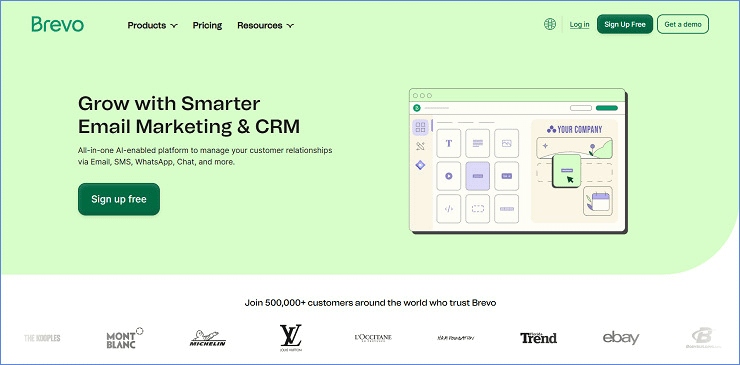
When you’re looking for Elastic Email alternatives that go beyond just sending emails, Brevo (previously known as Sendinblue) is often the first name that comes up. Unlike Elastic Email, which mainly focuses on transactional and marketing emails, Brevo gives you an all-in-one platform where you can manage email, SMS, WhatsApp, live chat, and even a lightweight CRM. This makes it a strong Elastic Email alternative if you want to centralize your customer communication instead of juggling multiple tools.
Brevo is especially well-suited for small businesses, eCommerce stores, and marketing teams that want user-friendly software without needing a developer’s help. If Elastic Email feels limiting in terms of automation, integrations, or multichannel campaigns, Brevo is one of the most practical competitors to Elastic Email you can switch to.
Pros
- Multichannel communication in one place – Send email campaigns, SMS blasts, and WhatsApp messages, or even engage visitors instantly with live chat.
- Built-in CRM – Manage contacts and track customer interactions without paying for another platform.
- Marketing automation – Create workflows to send the right message at the right time (e.g., abandoned cart reminders, welcome sequences).
- Drag-and-drop editor – Design beautiful emails without needing coding skills.
- Ecommerce integrations – Works seamlessly with Shopify, WooCommerce, Magento, and more.
- Scalable infrastructure – Whether you’re sending 500 emails or 500,000, Brevo grows with you.
- Free plan available – Unlike Elastic Email, you get access to essential features without spending a dime.
Cons
- Some advanced automation features are locked behind higher-tier plans.
- Deliverability can fluctuate depending on shared IP reputation.
- The interface, while simple, may feel basic for power users.
Pricing
- Free Plan → Send up to 300 emails per day with unlimited contacts.
- Starter → From $9/month, removes daily sending limit.
- Business → From $18/month, includes marketing automation and advanced analytics.
- Enterprise → Custom pricing for large-scale needs.
2. MailerSend
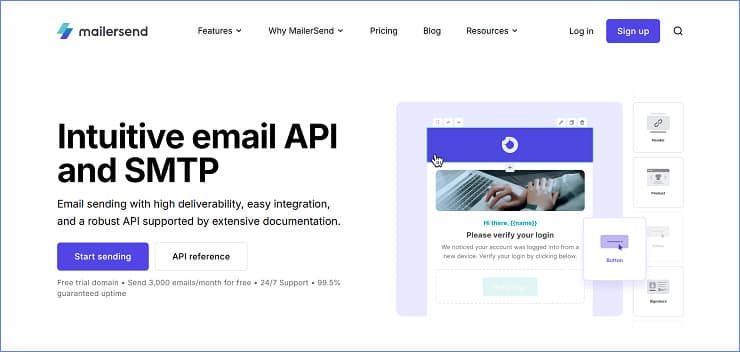
If you’re searching for Elastic Email alternatives that put a strong focus on transactional emails, then MailerSend is one of the most reliable options you can try. While Elastic Email has long been a go-to for developers who want to send bulk and transactional emails, MailerSend takes things a step further by combining developer-friendly APIs with a user-friendly interface. This makes it an ideal Elastic Email alternative whether you’re a developer building custom applications or a marketer who simply wants an intuitive tool to send personalized email campaigns.
MailerSend is best suited for startups, SaaS businesses, eCommerce platforms, and app developers who rely heavily on transactional messages like order confirmations, password resets, and delivery updates. If you’ve been frustrated by Elastic Email’s limited design flexibility or analytics, you’ll find MailerSend’s modern templates and detailed reporting a refreshing upgrade among the many alternatives to Elastic Email.
Pros
- Transactional & marketing emails in one platform – Perfect for businesses that don’t want to use separate services.
- Developer-friendly APIs – Easy integration with applications, websites, or CRMs.
- Drag-and-drop editor – Non-developers can design emails quickly without coding knowledge.
- Dynamic personalization – Add user-specific details like names, invoices, and order updates effortlessly.
- Advanced analytics – Track open rates, click-throughs, bounces, and deliverability to improve your campaigns.
- Scalable infrastructure – Built to handle high-volume email sending with excellent uptime.
- Team collaboration – Invite team members with role-based permissions to manage campaigns together.
Cons
- The free plan has limited monthly email volume compared to Elastic Email.
- Some advanced features (like dedicated IPs) require higher-tier pricing.
- Smaller plugin ecosystem than older competitors like SendGrid.
Pricing
- Hobby → Free 3,000 emails per month with access to most features.
- Starter → Starts at $35/month for 50,000 emails, scales up as volume increases.
- Professional → The pricing starts at $110/month for 50,000 monthly emails but with advanced features.
- Add-ons → Dedicated IPs, email verification, domain spaces and higher deliverability tools available separately.
3. SendPulse
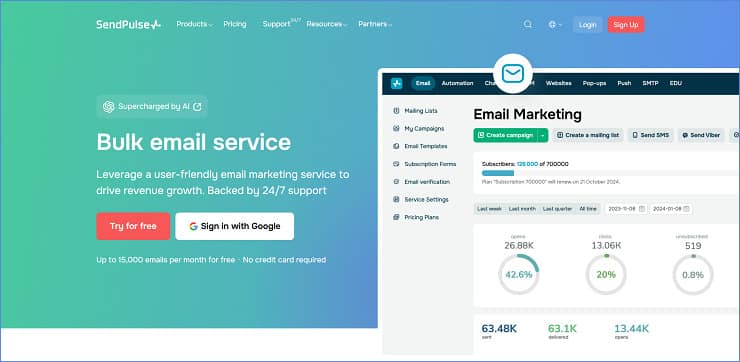
If you’re looking for Elastic Email alternatives that go beyond just email, SendPulse is a powerhouse worth exploring. Unlike Elastic Email, which primarily focuses on email marketing and transactional sending, SendPulse offers a true multi-channel communication platform. This means you’re not just sending emails—you can also engage your audience via SMS, web push notifications, chatbots (WhatsApp, Facebook Messenger, Telegram), and even Viber.
That makes SendPulse an excellent Elastic Email alternative for eCommerce stores, digital marketers, agencies, and businesses that want to reach customers on multiple touchpoints. Instead of juggling different tools for email, SMS, and chatbots, you can manage everything under one roof. If you’ve ever felt limited by Elastic Email’s narrow scope, SendPulse gives you the flexibility to create integrated campaigns that boost engagement and conversions.
Pros
- Multi-channel marketing – Manage emails, SMS, web push, and chatbots from a single dashboard.
- Automation 360 – Build advanced automation workflows with triggers and conditions to nurture leads across different channels.
- AI-powered personalization – Tailor content for each subscriber based on their behavior and preferences.
- Intuitive drag-and-drop editor – Quickly create professional emails without coding skills.
- Built-in CRM – Track customer interactions, manage deals, and connect marketing with sales.
- Free chatbot builder – Engage users on WhatsApp, Messenger, or Telegram without additional cost.
- Landing page & form builder – Capture leads directly from your campaigns.
Cons
- The interface can feel overwhelming for beginners due to so many features.
- Some advanced automation and chatbot capabilities are only available in higher-tier plans.
- Email deliverability rates, while strong, may require a dedicated IP for enterprise-level campaigns.
Pricing
- Free Plan → Up to 500 subscribers and 15,000 emails/month with limited features.
- Standard → Starts at $10/month for 500 subscribers, with increasing tiers as your list grows.
- Pro → Around $12/month for advanced automation and AI personalization.
- Enterprise → Custom pricing with dedicated support and full feature access.
4. EmailOctopus
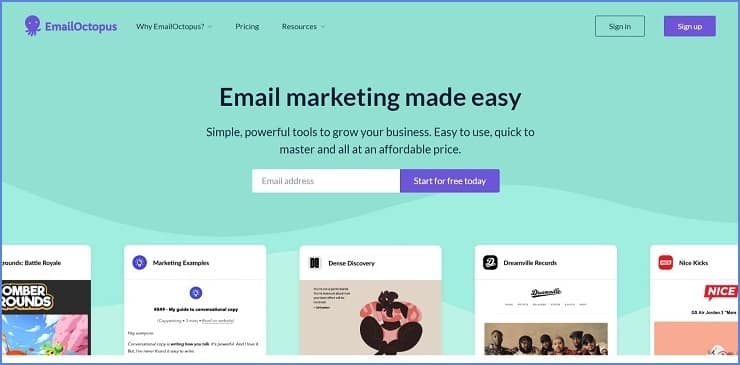
If you’re hunting for Elastic Email alternatives that are simple, affordable, and built for small businesses, EmailOctopus is a fantastic option to consider. Unlike Elastic Email, which can sometimes feel too technical or complex, EmailOctopus focuses on giving you a lightweight, easy-to-use email marketing platform without unnecessary extras. It’s one of the best Elastic Email alternatives for businesses, nonprofits, and creators who want a no-fuss tool that just works.
What sets EmailOctopus apart is its cost-effectiveness. If Elastic Email’s pricing or feature limitations have held you back, you’ll find EmailOctopus to be both budget-friendly and flexible. It’s particularly great for startups, solopreneurs, and small marketing teams that need professional email campaigns without spending hundreds of dollars per month.
Pros
- Clean, intuitive interface – Simple navigation makes it easy to set up and manage campaigns.
- Pre-built templates & editor – Design emails quickly with customizable templates and drag-and-drop features.
- Strong automation tools – Create welcome sequences, drip campaigns, and behavior-based automations.
- List segmentation – Target your audience with precision for better engagement.
- Third-party integrations – Works seamlessly with platforms like Shopify, WordPress, and Zapier.
- Affordable at scale – Even large subscriber lists come at a fraction of the cost compared to many alternatives.
- Focus on deliverability – Ensures your messages land in inboxes rather than spam folders.
Cons
- Lacks some advanced features that competitors like SendPulse or Brevo provide.
- Reporting and analytics, while functional, are not as in-depth as SendGrid or Mailgun.
- Customer support options are more limited compared to enterprise-level tools.
Pricing
- Starter → Free up to 2,500 subscribers and 10,000 emails/month.
- Pro → Begins at $9/month for 500 subscribers. Pricing scales with subscriber count; for example, $12/month for 1,000 subscribers with all features unlocked.
5. SMTP2GO
If your main concern with Elastic Email has been email deliverability, then SMTP2GO is one of the most reliable Elastic Email alternatives you can consider. Unlike Elastic Email, which has faced criticism for inconsistent inbox placement, SMTP2GO is laser-focused on making sure your emails actually reach your audience’s inboxes—without the stress of spam folders or delivery errors.
SMTP2GO is ideal for businesses, SaaS platforms, eCommerce stores, and developers who rely heavily on transactional and bulk emails. If you’ve ever felt frustrated with Elastic Email’s deliverability or support limitations, this service gives you peace of mind with its robust infrastructure, 24/7 support, and detailed reporting tools.
Pros
- Top-notch deliverability – Optimized infrastructure ensures your messages reach inboxes reliably.
- Worldwide servers – Global presence reduces latency and improves delivery speeds.
- Real-time reporting – Get insights on opens, clicks, bounces, and spam complaints.
- Built-in email testing tools – Preview emails across clients and spam filters before sending.
- 24/7 support – Round-the-clock technical assistance, unlike Elastic Email’s limited support.
- API & SMTP integration – Easy setup with apps, CRMs, and websites.
- Scalable sending – From small businesses to enterprises, handle email volumes with ease.
Cons
- Lacks a full-featured marketing automation suite (focused more on deliverability than design tools).
- Not ideal if you’re mainly looking for drag-and-drop email campaign builders.
- Pricing can feel a bit higher than Elastic Email for very small businesses with limited volume.
Pricing
- Free → Free 1,000 emails per month.
- Starter → $15/month for 10,000 emails.
- Professional → $75/month for 100,000 emails.
6. SendGrid
When you think about Elastic Email alternatives that are trusted by both startups and enterprises, SendGrid (by Twilio) almost always comes to mind. Known for its scalable infrastructure and excellent deliverability rates, SendGrid is one of the most established players in the email space. If Elastic Email has left you worried about scaling, reliability, or lack of enterprise-level support, SendGrid makes for a powerful Elastic Email alternative.
SendGrid is best suited for fast-growing businesses, SaaS companies, developers, and agencies that need a robust platform capable of handling both transactional and marketing emails at scale. It’s also a top choice for teams who want advanced API access and integrations with leading platforms, making it a go-to tool among the most reliable alternatives to Elastic Email.

Pros
- High deliverability rates – Trusted by global brands to ensure inbox placement.
- Powerful APIs – Developers can easily integrate with apps, CRMs, or eCommerce stores.
- Drag-and-drop editor – Marketers can design campaigns without technical knowledge.
- Scalable infrastructure – Handles everything from a few thousand emails to millions per month.
- Comprehensive analytics – Monitor engagement with open rates, click-throughs, bounce tracking, and more.
- A/B testing – Optimize subject lines, send times, and content for maximum performance.
- Strong ecosystem – Backed by Twilio, offering additional tools like SMS, voice, and authentication.
Cons
- Pricing can get expensive for small businesses compared to Elastic Email.
- The platform may feel complex for beginners due to its many features.
- Support at lower tiers isn’t as responsive as enterprise plans.
Pricing
- Free Plan → 100 emails/day forever (great for testing).
- Essentials → Starts at $19.95/month for 50,000 emails.
- Pro → From $89.95/month with dedicated IP and advanced features.
- Premier → Custom pricing for high-volume senders with dedicated support.
7. Sender
If you’re looking for Elastic Email alternatives that balance simplicity, affordability, and powerful automation, then Sender should definitely be on your radar. Unlike Elastic Email, which often requires a bit more technical know-how, Sender is designed to make email marketing effortless for both beginners and experienced marketers. With a strong focus on automation, personalization, and high deliverability, Sender stands out as an excellent Elastic Email alternative.
Sender is a perfect choice for small businesses, eCommerce stores, bloggers, and digital agencies who want to grow their audience without spending a fortune. If you’ve been frustrated by Elastic Email’s interface or lack of advanced features in its lower-tier plans, you’ll find Sender’s free plan and affordable upgrades refreshing compared to other alternatives to Elastic Email.

Pros
- Generous free plan – Up to 2,500 subscribers and 15,000 emails/month, making it ideal for startups.
- Easy-to-use drag-and-drop editor – Build beautiful campaigns quickly, even without design skills.
- Advanced automation workflows – Set up welcome series, abandoned cart reminders, and personalized drip campaigns.
- Segmentation & personalization – Send highly targeted campaigns that boost engagement.
- Built-in SMS marketing – Manage both email and SMS campaigns in one platform.
- Strong deliverability – Optimized infrastructure to keep your emails out of spam folders.
- Integrations with popular tools – Works seamlessly with Shopify, WooCommerce, WordPress, and more.
Cons
- The template library is smaller compared to tools like Brevo or SendPulse.
- Reporting is basic and lacks the depth of SendGrid or Mailgun.
- Customer support response times can be slower during peak hours.
Pricing
- Free Forever → Up to 2,500 subscribers and 15,000 emails/month.
- Standard → Starts at $10/month for 12,000 emails in a month.
- Professional → Around $20/month for 24,000 emails/month and unlimited subscribers with advanced automation.
- Enterprise → Custom pricing for large businesses with dedicated support needs.
8. Mailgun
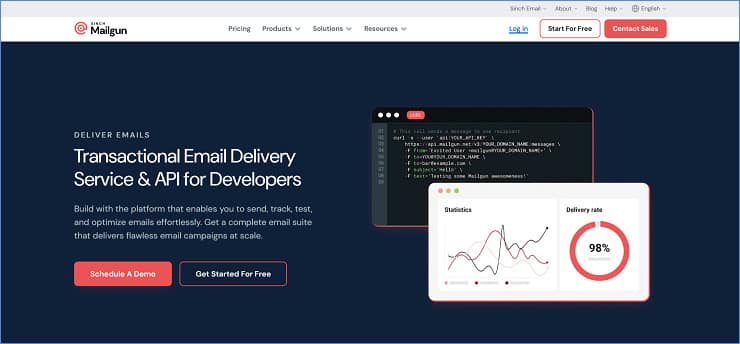
Mailgun is one of the most developer-focused Elastic Email alternatives, built for businesses that demand precision and scale. While Elastic Email serves as a good entry-level option, it often struggles when handling advanced integrations or high-volume transactional emails. Mailgun, on the other hand, is designed to give developers and SaaS businesses full control with powerful APIs, real-time tracking, and enterprise-grade deliverability.
This makes Mailgun a top Elastic Email alternative for SaaS companies, large eCommerce platforms, and app developers who prioritize speed, customization, and reliability. With features like email validation, inbound routing, and dedicated IPs, you’ll get the kind of infrastructure that scales effortlessly as your business grows.
Pros
- Powerful APIs – Send, receive, and track emails programmatically with ease.
- High deliverability rates – Advanced tools like dedicated IPs, domain authentication, and inbox placement monitoring.
- Scalable infrastructure – Capable of handling millions of emails per day.
- Inbound email routing – Process and route incoming emails directly into your applications.
- Detailed analytics – Real-time logs and metrics to optimize performance.
- Email validation API – Verify email addresses before sending to reduce bounce rates.
- Integrations with top platforms – Works seamlessly with CRMs, SaaS tools, and eCommerce systems.
Cons
- The platform is highly technical—best suited for developers rather than beginners.
- No built-in drag-and-drop editor for quick campaign design.
- Can get expensive compared to Elastic Email if you’re scaling quickly.
Pricing
- Free → 100 emails per day to test the software.
- Basic → $15/month for 10,000 emails with tracking and analytics.
- Foundation → $35/month for 50,000 emails plus deliverability features.
- Scale → $90/month for 100,000 emails and enterprise-level sending with premium support.
9. Postmark
Postmark is one of the most dependable Elastic Email alternatives, particularly for transactional emails. Where Elastic Email often splits focus between bulk marketing and transactional communication, Postmark specializes in ensuring critical emails—like password resets, order confirmations, or account alerts—reach the inbox in seconds.
This makes it a strong choice for SaaS businesses, eCommerce stores, and developers who prioritize speed, reliability, and user trust. Unlike Elastic Email, Postmark also maintains separate infrastructure for transactional and marketing traffic, which keeps delivery rates consistent and avoids delays caused by bulk campaigns.
Pros
- Lightning-fast delivery – Emails are delivered within seconds.
- High deliverability rates – One of the best inbox placement records among alternatives to Elastic Email.
- Developer-friendly tools – Clean APIs, SDKs, and webhooks for seamless integration.
- Detailed message tracking – Full event history for better visibility.
- Dedicated infrastructure – Keeps transactional and marketing emails separate for reliability.
Cons
- Not designed for bulk email marketing campaigns.
- Pricing can feel steep for businesses sending large volumes of transactional emails.
- Limited built-in marketing automation features compared to other Elastic Email alternatives.
Pricing
- Test Account → Free with 100 emails/month.
- Paid Plans → Start at $15/month for 10,000 emails, followed by $16.50/month and $18/month for advanced features.
- Add-ons → Dedicated IPs available at $50/month.
10. Amazon SES
Amazon Simple Email Service (SES) is one of the most powerful Elastic Email alternatives for businesses that need scalability, reliability, and cost-effectiveness. Backed by Amazon Web Services (AWS), it offers enterprise-grade email infrastructure at a fraction of the cost compared to many other platforms. Unlike Elastic Email, which often struggles at very large volumes, Amazon SES is built for massive scalability—making it a great fit for startups, SaaS companies, developers, and enterprises alike.
What makes Amazon SES stand out is its flexibility. You can integrate it directly into your applications using APIs or SMTP, making it ideal for transactional emails like password resets, notifications, and alerts, as well as bulk marketing campaigns. Since SES is part of AWS, you also get access to advanced tools for monitoring, analytics, and security, giving you complete control over your email operations.
Pros
- Highly scalable – Perfect for businesses sending millions of emails per month.
- Pay-as-you-go pricing – Only pay for what you send, no hidden costs.
- Excellent deliverability – Backed by Amazon’s global cloud infrastructure.
- Flexible integration – Works seamlessly with APIs, SDKs, and SMTP.
- Advanced security – Supports DKIM, SPF, and dedicated IPs.
- Detailed analytics – Get real-time feedback on bounces, complaints, and deliveries.
Cons
- Requires technical expertise for setup and management.
- Limited out-of-the-box marketing features compared to other Elastic Email alternatives.
- Customer support can feel minimal unless you pay for AWS premium support.
Pricing
- Pay-as-you-go → $0.10 per 1,000 emails sent.
- Incoming Mail → $0.10 per 1,000 incoming emails.
- Dedicated IPs → $24.95 per IP per month.
- Extra AWS charges may apply for data transfer and attachments.
How to Choose the Best Elastic Email Alternative
With so many Elastic Email alternatives available, it’s easy to feel overwhelmed. Each tool promises high deliverability, great features, and scalability—but the truth is, the best Elastic Email alternative for you depends on your unique needs. To make the decision easier, here’s a checklist you can use before making the switch:
1. Define Your Primary Goal
Ask yourself: do you need a tool mainly for transactional emails (like Amazon SES, Postmark, or Mailgun), or do you want a marketing-focused platform with automation and templates (like Brevo, SendPulse, or Sender)? The answer will immediately narrow your options.
2. Check Deliverability Rates
Poor deliverability is one of the main reasons people look for alternatives to Elastic Email. Look for platforms with strong reputations, advanced spam filters, and features like DKIM, SPF, and dedicated IPs to improve inbox placement.
3. Evaluate Ease of Use
Some providers (like EmailOctopus and Brevo) are beginner-friendly, while others (like Amazon SES or Mailgun) require technical skills. If you’re not a developer, choose a platform with an intuitive dashboard and drag-and-drop tools.
4. Compare Pricing Models
Not all Elastic Email alternatives charge the same way. Some offer pay-as-you-go pricing (Amazon SES, SMTP2GO), while others provide tiered monthly plans (SendGrid, SendPulse). Align pricing with your sending volume and budget to avoid surprises.
5. Look for Automation & Personalization
Modern email marketing isn’t just about sending messages—it’s about sending the right message at the right time. If automation, segmentation, and personalization matter to you, go for platforms like Brevo, Sender, or SendPulse.
6. Analyze Integration Capabilities
Think about the tools you already use—your CRM, eCommerce platform, or CMS. Choose an Elastic Email alternative that integrates smoothly with your existing stack so you don’t end up juggling multiple systems.
7. Consider Support & Reliability
A great platform isn’t just about features—it’s about the support behind it. Check whether the provider offers 24/7 chat, email, or phone support. Some, like Postmark, are known for lightning-fast responses, while others rely on ticket-based systems.
8. Trial Before You Commit
Most Elastic Email alternatives offer free trials or freemium plans. Take advantage of them to test deliverability, ease of use, and features before you lock yourself into a paid plan.
Conclusion
By now, you’ve seen that there are plenty of powerful Elastic Email alternatives – each with its own strengths, pricing models, and ideal use cases. Whether you’re a small business owner who needs a simple, user-friendly Elastic Email alternative like Brevo or EmailOctopus, or a developer looking for a high-volume transactional solution like Amazon SES or Mailgun, there’s no shortage of options.
The key is to match the platform with your specific needs. If you value automation and marketing features, tools like SendPulse or Sender will serve you well. If deliverability and speed are your top priorities, Postmark or SMTP2GO could be the right fit. And if scalability and cost-effectiveness are non-negotiable, SendGrid and Amazon SES are hard to beat.
At the end of the day, the right choice depends on your goals, budget, and technical expertise. The good news? Unlike Elastic Email, these providers have a proven track record of stability, performance, and customer satisfaction.
👉 So, take advantage of free trials, test different platforms, and find the best Elastic Email alternative that helps you send emails reliably, scale with confidence, and grow your business.
Here are a couple of other blog posts that you may like –
- Best SMTP Services
- Top SendPulse alternatives
- Tested SparkPost alternatives
- Alternatives to EmailOctopus
FAQs on Elastic Email Alternatives
Q1. What is the best Elastic Email alternative?
It depends on your goals. For all-in-one marketing, look at Brevo or SendPulse. For developer-grade transactional sending, Postmark, Mailgun, MailerSend, or Amazon SES shine. For budget-friendly campaigns, Sender or EmailOctopus are strong alternatives to Elastic Email.
Q2. Which Elastic Email alternatives offer the best deliverability?
For time-sensitive messages, Postmark is famously fast and reliable. SendGrid, SMTP2GO, and Mailgun also have excellent deliverability tooling (dedicated IPs, suppression management, reputation monitoring).
Q3. I’m a small business/solo marketer. What should I choose?
You’ll likely prefer a simple UI, templates, and automation. Brevo, Sender, and EmailOctopus are great Elastic Email alternative options with gentle learning curves and friendly pricing.
Q4. What if I’m a developer who needs APIs and webhooks?
Go with developer-first competitors to Elastic Email: Mailgun, Postmark, MailerSend, SendGrid, or Amazon SES. They offer robust APIs, SDKs, webhooks, and fine-grained logs.
Q5. Can I send both marketing and transactional emails from one platform?
Yes. SendGrid, Brevo, SendPulse, and Sender handle both. Many teams still keep transactional on a specialized service (e.g., Postmark and MailerSend) and marketing on a separate tool to protect deliverability.
Q6. How do I migrate from Elastic Email without downtime?
1. Authenticate your new sender domain (SPF, DKIM; optional DMARC).
2. Import clean lists (remove bounces/complaints).
3. Port key automations/templates.
4. Run a staggered cutover: switch low-risk flows first, then bulk campaigns.
5. Warm up any new IP/domain gradually.
6. Monitor errors, bounces, and inbox placement daily for the first weeks.
Q7. Do I need a dedicated IP with an Elastic Email alternative?
Not always. Shared IPs are fine for modest volumes if the provider maintains good reputation. Choose a dedicated IP when you send high volume regularly, need strict reputation control, or handle mission-critical transactional traffic.
Q8. How do I warm up a new domain or IP?
Start small, send to your most engaged contacts, and increase volume steadily over 2–4 weeks. Keep content relevant, use double opt-in where possible, and keep complaint rates below 0.1%. Consistency beats speed.
Q9. What improves deliverability the most after switching?
1. Proper authentication (SPF, DKIM; add DMARC).
2. List hygiene (remove inactives, bounces, role accounts).
3. Clear consent (opt-in), easy unsubscribes.
4. Segmentation + relevant content.
5. Stable sending patterns and clean HTML.
Q10. Which alternatives to Elastic Email are most affordable?
For lean budgets, Sender and EmailOctopus are typically the most cost-effective for marketing emails. Amazon SES often has the lowest per-email cost for high-volume transactional sending (but expects more technical setup).
Q11. Are free plans or trials available?
Yes, most Elastic Email alternatives offer a free tier or trial. Use them to test templates, APIs, and analytics before committing.
Q12. Is compliance (GDPR/CCPA/CAN-SPAM) supported by these tools?
Yes. Leading providers support compliance features (consent capture, unsubscribe management, data exports/deletions). You’re still responsible for how you collect and use data—make sure your forms, lists, and policies are compliant.
Q13. Can I use multiple providers for redundancy?
Absolutely. Many teams set up SMTP/API failover (e.g., Postmark primary, SES backup). This reduces risk during incidents and helps protect SLAs for transactional emails.
Q14. What’s the difference between SMTP relay and API sending?
SMTP is universal and quick to set up; APIs offer better performance, richer analytics, templating, and error handling. If you’re technical or scaling, APIs usually win.
Q15. How do I choose the right Elastic Email alternative for my stack?
List your must-haves (automation vs. transactional, integrations, budget, support), short-list 2–3 tools, run live tests (templates, webhooks, deliverability), and compare results. The “best” tool is the one that fits your workflows today—and scales with you tomorrow.